By Jason Haggstrom, March 27, 2019
From the graphic simplicity of to the graphic complexity of , this is one of my favorite bunches of Looney Tunes and Merrie Melodies title cards. So few of the title cards feature characters in their designs and yet almost all of them stand out because of the unique nature of typography from card to card and the fantastic attention to detail featured in each painting. Even the more basic title cards such as —with its wonderful lettering and textured background—and —with its neon-inspired type—stand out as examples of great design by way of simplicity.
Continue reading…
By Jason Haggstrom, January 30, 2013
In my recent takedown of The King’s Speech, I focused largely on director Tom Hooper’s overbearing use of "short-siding" (i.e., framing a shot so a character looks and speaks towards the edge of the frame that they are most closely positioned rather than across the length of the frame to where their partner in conversation will appear after the next cut).
As with any artistic choice available to a director, short-siding is not inherently evil. But by making it the default mode of framing in The King’s Speech, Hooper turned it into a mere gimmick—conspicuous, but never compelling. When used sparingly and with intelligence in a richly designed scene, the short-sided shot becomes a component to help convey apprehension and conflict. When used well, you may not even notice that short-siding was ever used at all.
Below are but two recent examples where short-siding was used by a director to great effect.
Continue reading…
By Jason Haggstrom, December 31, 2012
Oh, lord. Here we go again. Somebody, please stop the ride. I think I’m going to throw up.
If you’ve spent anytime in a movie theatre over the last few months, you’ve no doubt been subjected to the trailer for the latest film adaptation of Les Misérables. Repeatedly. And although Anne Hathaway’s vocal performance of “I Dreamed a Dream” that plays over the teaser is truly breathtaking (without a doubt the greatest “Holy shit!” moment I had at the movies this year), the images themselves are a canted, shaky, fish-eyed mess. The biggest question for me during this year’s run of awards-contending films has not been “When will I find the time for all these movies?,” but “Can I really stomach another Tom Hooper film, even if it is guaranteed to contain that performance?” I’ve never been to France, but if Hooper’s vision of Les Misérables is to be believed, it’s a place where visitors should always be on the lookout for the nearest handrail in order to avoid losing both their balance and their lunch.
Continue reading…
By Jason Haggstrom, October 31, 2012
I admit it. Like so many millions, I am a Star Wars geek. Having been born right smack dab in the middle of the 1970s, it was pretty hard to not fall in love with the franchise in my formative years. My very earliest memories are populated by Luke Skywalker action figures, and toy versions of the most beautiful spaceships ever designed.
To say that the series had an impact on my life, and my love for cinema, would be a massive understatement. When my two young kids asked me to detail just how Chicken Run was made, I involved them in the creation of a short stop motion film starring R2-D2 so they could (hopefully) learn by doing. In anticipation of Revenge of the Sith, I composed a tongue-in-cheek limerick about Obi-Wan Kenobi where each of the six stanzas referred to one of the films. Just this past weekend, I attended a Halloween event at a military aircraft museum because I really wanted to get my taken with an amazing, fan-made replica of R2-D2 that was onsite (well, I also really wanted to see the planes…). And I didn’t just go way out of my way to make it to each of the last three Star Wars films on opening night, my best friend actually flew across the country so that we could share in the experience together (both the excitement, and the disappointments). Yes, I am a Star Wars geek.
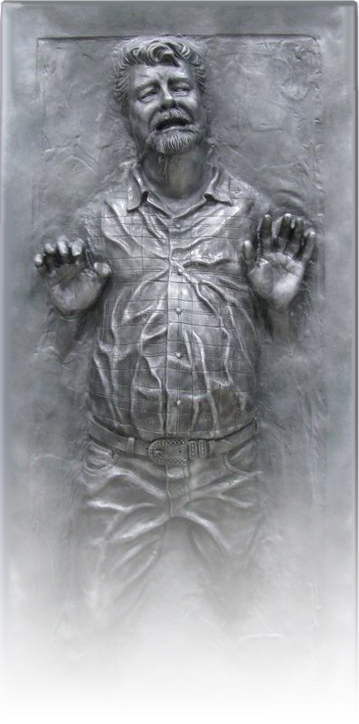
As both a Star Wars geek and a cinephile, my mind has been consumed by a single question since yesterday’s announcement that Disney had bought Lucasfilm and would be producing a new trilogy of Star Wars films beginning in 2015. That question? With George Lucas (thankfully) out of the picture, who will be hired to direct? Here is my wish list:
Continue reading…
By Jason Haggstrom, October 31, 2012
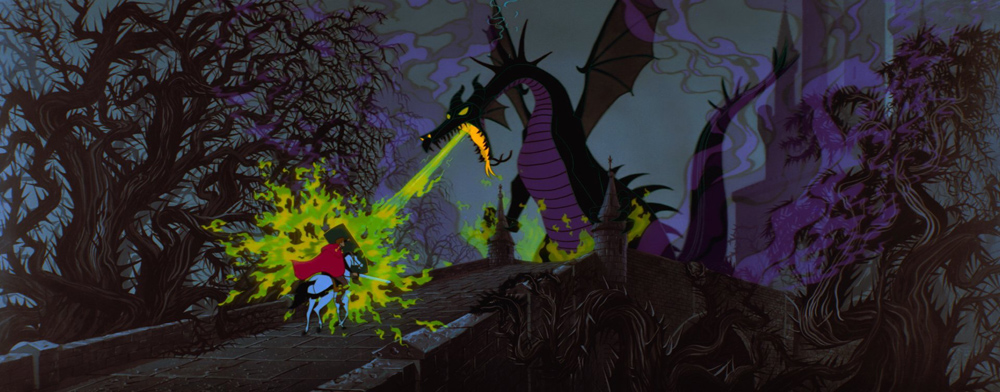
It’s October, and with the changes of Autumn come fall colors. Between the descending leaves and the presence of pumpkins, we’re accustomed to seeing plenty of orange and yellow at this time of year. But the Halloween season brings forth another, less natural combination of colors. It’s a union of colors that resonates with me more than any other. It’s that luscious pairing of purple & green.
I have the distinct memory of seeing Disney’s Sleeping Beauty in the theatre as a kid. IMDb lists Sleeping Beauty as being re-released in September of 1979 (it’s original run was in 1959), which would have made me 3½. Seeing that film for the first time, and in such a magnificent setting, was a formative experience.
Continue reading…
By Jason Haggstrom, June 8, 2012
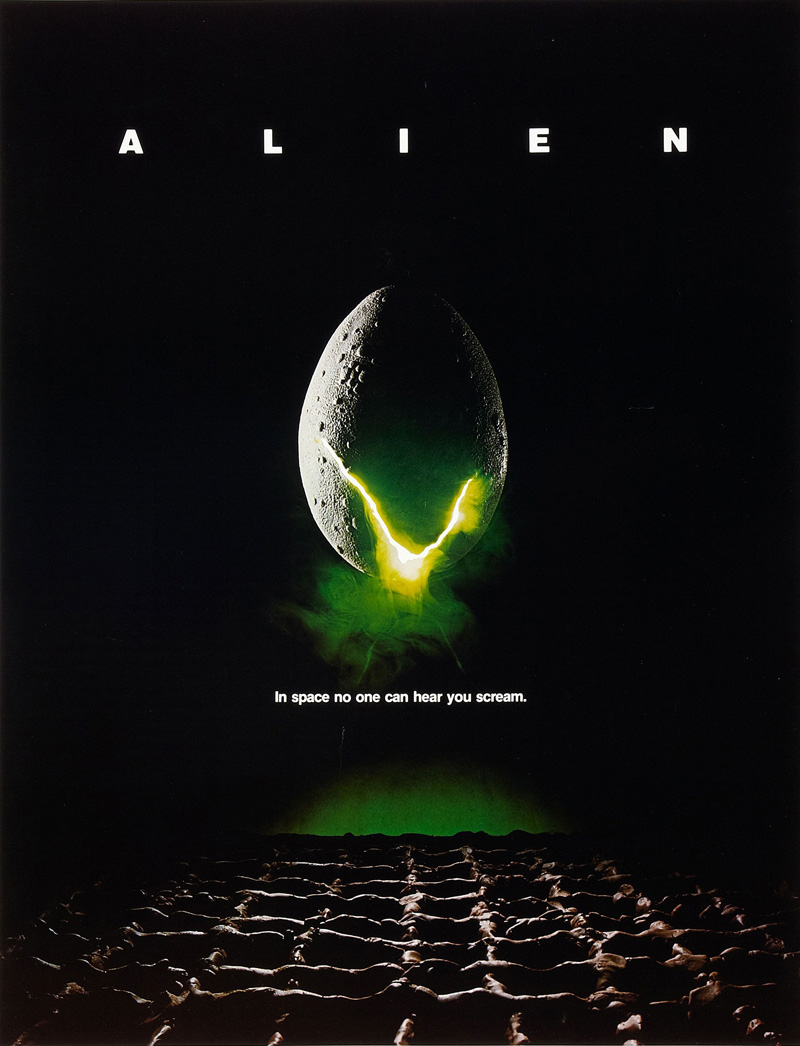
In the thirty years since its release, Alien has become a film of hot debate amongst film theorists. Academic analyses of the film draw attention to many differing themes that lead to feminist, Marxist, psychoanalytic, and other readings. But these theories exist in a vacuum of their own space, playing to each author’s pet theories rather than looking to analyze the film from the screen and then out. Most critiques, academic and otherwise, ultimately conclude that Alien is a feminist film because of its representation of the workplace as a home to equality and a place where traditional gender roles have been obliterated. But there’s something else lingering under the surface: fear. Not the fear of the devouring Alien, but a fear and anxiety of a future where the equalizing of the sexes might lead to the blending of sexual biology as well. What is ultimately revealed by Alien is the anxiety of men during the era of second-wave feminism in which the film was produced.
Continue reading…
By Jason Haggstrom, March 25, 2012
Frank Ockenfels 3 has once again produced a series of gorgeous character portraits ahead of AMC’s new season of Mad Men. Like the portraits he did for season four, these images are dramatic works of art that capture some of the characters and themes from the show and its upcoming season. After a year and a half hiatus, it’s nice to finally see these characters again. Below are some of my favorites.
Continue reading…
By Jason Haggstrom, February 26, 2012
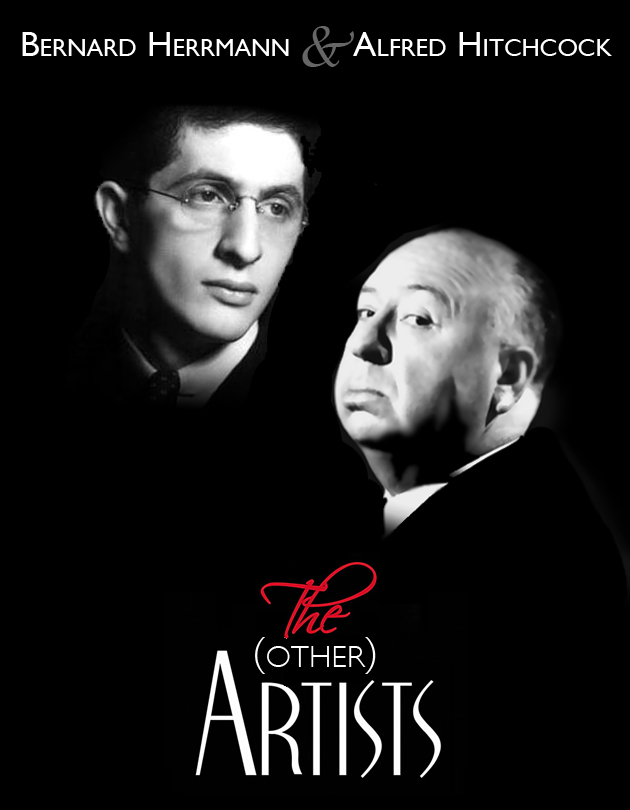
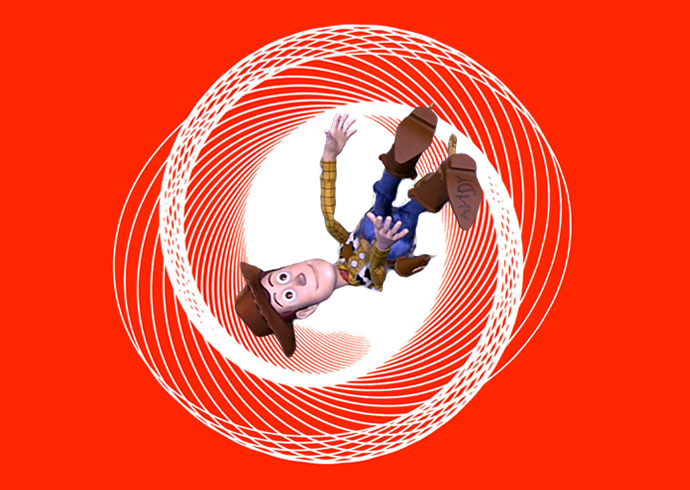
There’s been a lot of buzz lately about The Artist, especially with tonight’s Academy Awards looming. But the conversation hasn’t just been about the merits of the film on the whole, but also about its appropriation of one of the most famous musical cues to ever be attached to a film. That piece would be Bernard Herrmann’s "Scene d’Amour" from Alfred Hitchcock’s 1958 masterpiece, Vertigo. Is its use in The Artist intended as a loving homage as The Artist‘s director, Michel Hazanavicius, claims? And if The Artist takes home an Oscar for Best Original Score, can we really say that at least some of the credit doesn’t belong to the now-deceased Bernard Herrmann for the music he created for a different film entirely? [Update: The Artist just won for Best Original Score.]
Continue reading…
By Jason Haggstrom, February 25, 2012
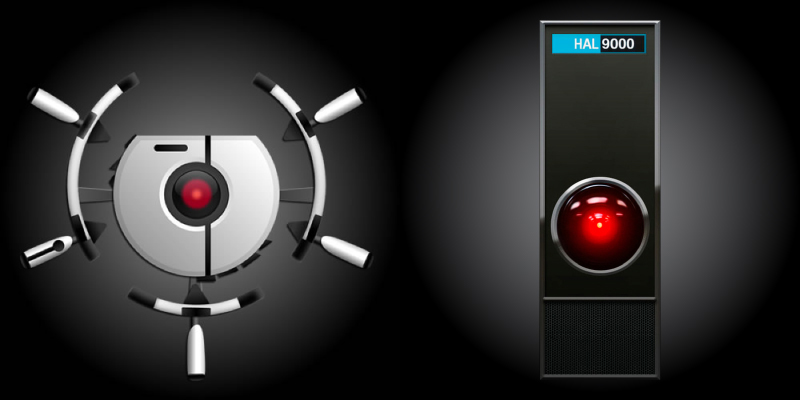
The films of Pixar are heavily populated with references to movies of the past, to the films most beloved by the studio’s many writer/directors. Consider WALL-E‘s villainous robot AUTO whose devilish red-eye brings to mind ; or The Incredibles‘ hilarious Edna as a ; or even A Bug’s Life whose entire plot—a defenseless village hires warriors to protect itself from bandits—is lifted right out of Seven Samurai. Most of these homages are created as comedy. They’re cinematic in-jokes for the initiated, connections that simply make one smile. But Pixar’s films are far greater than the sum of their homages. Most often they are great films, the kind that reveal hidden nuances with each additional viewing. Toy Story 2 is one such film.
Continue reading…
By Jason Haggstrom, December 26, 2011
What, exactly, does "Tintin" mean to you? There’s a very good chance that for you, "Tintin" is simply the title to Steven Spielberg’s new, mo-cap animated film that opened in theatres this past week… and nothing more. But for me "Tintin" isn’t just a funny sounding name for a character or movie. Tintin is a passion that has been with me for most of my life. Tintin was my gateway drug to the world of comics, a medium that I grew to adore as much as any other, and that I still love today.
Tintin in America is the first comic book that I can recall reading. Well, there had always been the comic strips in the daily newspaper, but that’s not quite the same. I discovered a few Adventures of Tintin books in a dark, neglected section of a local book store back in 1983 or ‘4. Back then, graphic novels and other comic collections just weren’t stocked at traditional book stores so finding comics—especially comics that I’d never even heard of—felt like a wondrously odd and magical discovery. I was in second grade—eight years old, or about to be. In the years that followed, I picked up copies of all the Adventures of Tintin books; I’ve probably read each of them a dozen times. And now, 28 years since my first encounter with the character, we have a Tintin movie created by one of our greatest filmmakers. My expectations for the film are high. Unreasonably so. No current film project is dearer to my heart than this one.
Continue reading…

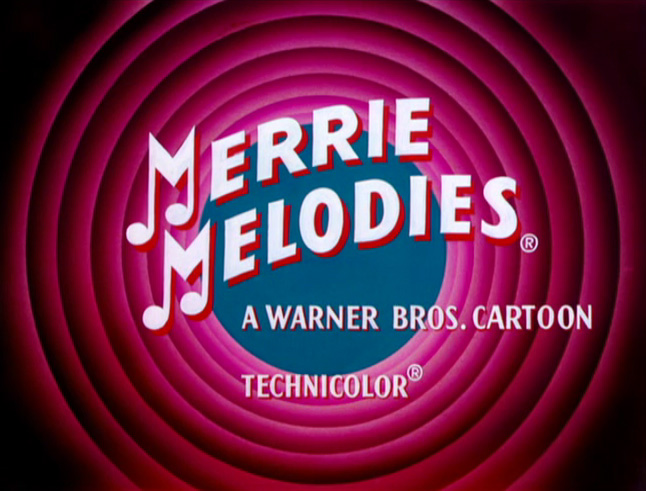 From the graphic simplicity of Baseball Bugs to the graphic complexity of Hollywood Daffy, this is one of my favorite bunches of Looney Tunes and Merrie Melodies title cards. So few of the title cards feature characters in their designs and yet almost all of them stand out because of the unique nature of typography from card to card and the fantastic attention to detail featured in each painting. Even the more basic title cards such as Rabbit Transit—with its wonderful lettering and textured background—and Slick Hare—with its neon-inspired type—stand out as examples of great design by way of simplicity.